
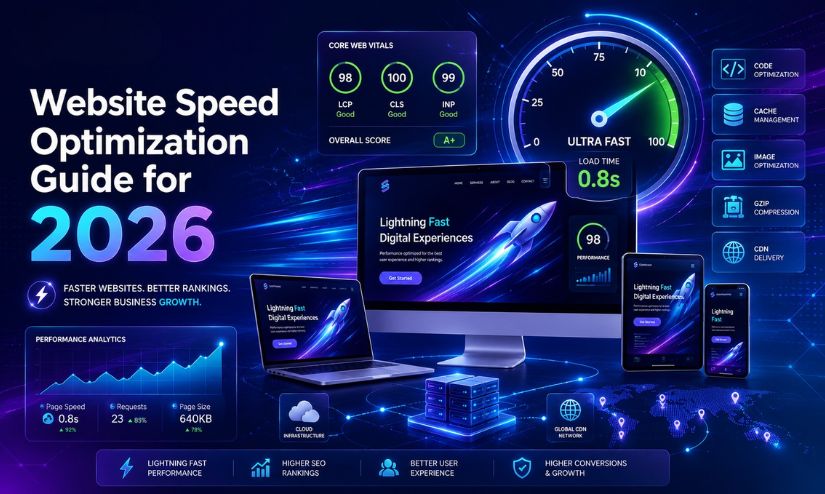
Website speed is no longer just a technical metric it is one of the biggest factors influencing user experience, Search Rankings, and conversions. In 2026, visitors expect websites to load almost instantly, regardless of the device or internet connection they use. A slow website can lead to higher bounce rates, lower engagement, and missed business opportunities.
Whether you run a business website, an online store, or a blog, improving page speed should be a top priority. This guide explains the latest website speed optimization strategies, practical techniques, and future trends to help you create a faster, more user-friendly website that performs well in both search engines and AI-powered search platforms.
Why Website Speed Matters More Than Ever
Website speed refers to how quickly your web pages load and become interactive for visitors. Search engines use speed as a ranking factor because users prefer fast loading websites that provide a smooth browsing experience.
A faster website offers several important benefits:
- Better user experience and lower bounce rates
- Improved search engine rankings
- Higher conversion rates and sales
- Better Core Web Vitals performance
- Increased mobile usability
For example, imagine an online clothing store where product pages load in under two seconds. Customers can browse products quickly, leading to longer sessions and more completed purchases. On the other hand, a slow website often loses visitors before they even see the content.
In 2026, website speed also influences AI search results, voice search responses, and user satisfaction across different devices.

Best Website Speed Optimization Techniques for 2026
Modern websites require more than simple image compression. A complete optimization strategy focuses on both front-end and back-end performance.
Some of the most effective techniques include:
- Compress and resize images using modern formats like WebP or AVIF.
- Enable browser caching to reduce repeated downloads.
- Minify CSS, JavaScript, and HTML files.
- Use a reliable Content Delivery Network (CDN).
- Reduce unnecessary plugins and third-party scripts.
- Enable GZIP or Brotli compression.
- Optimize server response time.
- Implement lazy loading for images and videos.
Choosing high-performance web hosting is equally important. Even a perfectly optimized website may struggle if the server responds slowly.
Regularly testing website performance using tools such as Google PageSpeed Insights or Lighthouse helps identify bottlenecks before they affect users.

Common Website Speed Issues and How to Fix Them
Many websites become slower over time because new features, plugins, and media files are added without regular maintenance.
Common speed problems include oversized images, excessive JavaScript, slow hosting, render blocking resources, and outdated themes.
To improve performance:
- Remove unused CSS and JavaScript files.
- Update plugins and website software regularly.
- Limit unnecessary animations.
- Reduce HTTP requests.
- Optimize your database.
- Load external fonts efficiently.
If your homepage takes six seconds to load, start by identifying the largest files. Compressing images and removing unused scripts can often reduce loading time significantly without redesigning the entire website.
Regular website audits ensure your performance stays consistent as your content grows.

Future Trends in Website Speed Optimization
Website Performance continues to evolve as browsers, devices, and search engines become smarter. Businesses that adopt new optimization techniques early will have a competitive advantage.
Some important trends expected in 2026 include:
Artificial Intelligence is increasingly being used to optimize image delivery, caching strategies, and code optimization automatically.
Edge computing allows website content to be delivered closer to users, reducing latency and improving loading speed.
Modern frameworks are shifting toward lightweight architectures that prioritize performance by default.
Core Web Vitals remain essential performance indicators, focusing on loading speed, responsiveness, and visual stability.
Sustainable web design is also becoming more important. Lightweight websites consume less bandwidth and energy while providing a faster experience for users.
The best approach is to treat website speed as an ongoing process rather than a one-time task. Continuous monitoring, testing, and optimization will help maintain excellent performance throughout the year.

Frequently Asked Questions
1. What is website speed optimization?
Website speed optimization is the process of improving how quickly a website loads and responds by optimizing images, code, hosting, caching, and other technical elements.
2. Why is website speed important for SEO?
Fast websites provide a better user experience, reduce bounce rates, and improve Core Web Vitals, all of which can positively influence search rankings.
3. What is a good website loading time in 2026?
Most experts recommend keeping page load times below two seconds for the best user experience and search performance.
4. Which factors slow down a website the most?
Large images, excessive JavaScript, poor hosting, too many plugins, render-blocking resources, and slow server response times are common causes.
5. How often should I test my website speed?
It is best to test your website monthly and after major updates to ensure consistent performance and quickly identify new issues.
Conclusion
Website speed optimization is one of the smartest investments you can make in 2026. Faster websites improve user experience, strengthen search visibility, increase engagement, and support higher conversion rates. Small improvements such as image optimization, code minification, caching, and reliable hosting can make a significant difference over time.
Instead of waiting for performance problems to affect your visitors, adopt a proactive optimization strategy. Regular testing and continuous improvements will help your website remain competitive across Google Search, AI search engines, and future web technologies.