
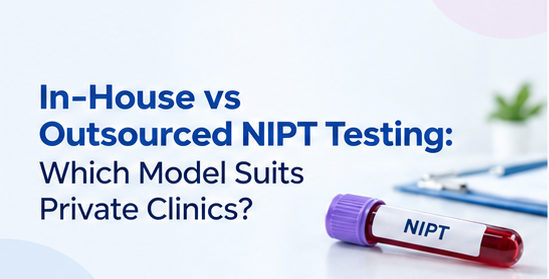
For private clinics considering non-invasive prenatal testing, choosing between in-house testing and outsourcing can have an impact on workflow, resources and patient services. Reliable NIPT laboratory services in the UK can provide specialist testing support, while NIPT outsourcing may allow clinics to access laboratory expertise without establishing their own testing infrastructure. For NIPT for healthcare professionals in the UK, understanding both models is essential before making a decision.
What Does In-House NIPT Testing Involve?
In-house testing means a clinic or healthcare organisation manages the laboratory testing process within its own facilities. This requires appropriate laboratory infrastructure, specialist equipment, trained personnel, quality management systems and processes for sample handling and analysis.
While this model can provide greater control over certain laboratory processes, it also requires significant investment and ongoing operational management. Clinics must consider equipment maintenance, staffing, quality assurance, and regulatory requirements.
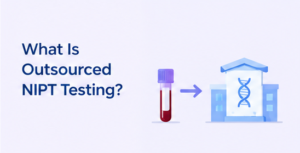
What Is Outsourced NIPT Testing?
With outsourced testing, the clinic collects samples according to the provider’s requirements and sends them to a specialist laboratory for processing and analysis. The external laboratory manages the testing process and provides the results to the referring healthcare provider.
For many private clinics, NIPT outsourcing in the UK can offer access to established laboratory capabilities without the need to build and maintain an in-house testing facility. This can be particularly relevant for clinics that want to expand their prenatal screening services while keeping their internal infrastructure focused on patient care.
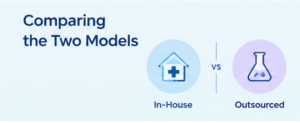
Comparing the Two Models
When evaluating in-house and outsourced testing, private clinics should consider:
- Infrastructure: In-house testing requires dedicated laboratory facilities and equipment, while outsourcing uses an external laboratory.
- Expertise: Outsourcing can provide access to specialist laboratory professionals and established testing processes.
- Operational requirements: In-house testing involves managing staffing, equipment and quality systems. Outsourcing can reduce the laboratory management burden for the clinic.
- Sample logistics: Clinics should assess collection, transportation, processing and reporting procedures before selecting a model.
- Scalability: Outsourcing may provide flexibility for clinics whose NIPT volumes change over time.
For NIPT for healthcare professionals in the UK, the appropriate model ultimately depends on the clinic’s resources, testing volume, infrastructure and service requirements.

Finding the Right NIPT Testing Approach
There is no single model that suits every private clinic. However, partnering with an experienced provider can help clinics access specialised NIPT laboratory services in the UK without establishing a complete testing laboratory themselves. By evaluating quality processes, sample logistics, reporting, professional support and scalability, clinics can determine whether NIPT outsourcing aligns with their requirements.
For healthcare providers exploring reliable NIPT laboratory services in the UK and professional-focused NIPT for healthcare professionals, choosing the right testing model can be an important step towards developing an efficient prenatal screening pathway.