
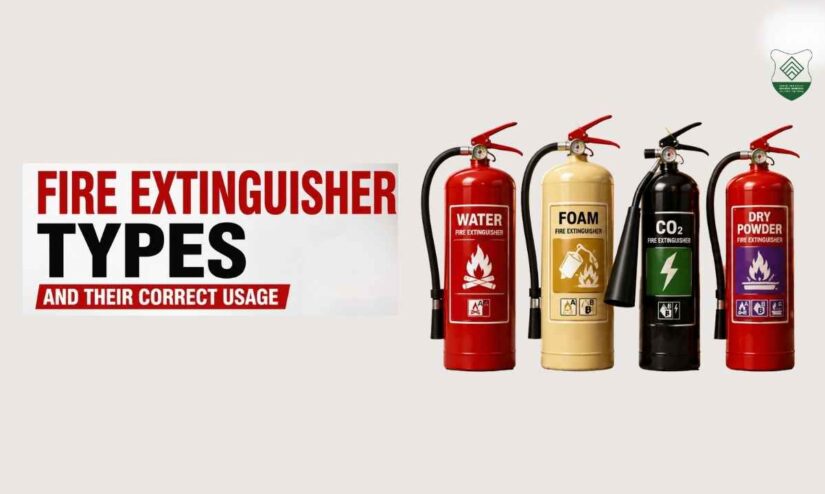
Fire emergencies can happen anywhere, anytime, like in homes, offices, factories, and commercial spaces. Choosing the right fire extinguisher is important to prevent fire challenges and create a safer workplace. Using the wrong extinguisher can worsen the situation and increase safety risks. This blog by the best Fire and Safety Course institute in Kolkata explains fire extinguisher types, their use cases, and proper techniques to use the fire extinguisher. Moreover, this blog gives you a better idea about which fire extinguisher gives better protection from fire.
Water Fire Extinguishers: Best for Ordinary Combustible Fires
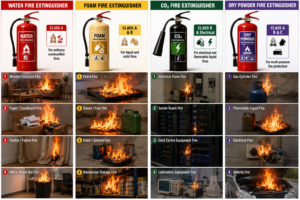
Water fire extinguishers are designed for Class A fires involving wood, paper, cardboard, textiles, and other solid combustible materials. They cool flames by reducing heat and preventing re-ignition. These extinguishers are commonly found in schools, offices, and residential buildings. They should never be used on electrical fires, flammable liquids, or cooking oil fires due to significant dangers.
Foam Fire Extinguishers: Effective for Liquid and Solid Fires
Foam fire extinguishers are suitable for Class A and Class B fires. They work by creating a protective blanket over burning liquids, cutting off oxygen and cooling the fire. Common applications include warehouses, garages, workshops, and fuel storage areas. Foam extinguishers help control fires involving petrol and diesel but are unsuitable for energised electrical equipment and kitchens. If you want to know the skills of fire management, then join the best Fire and Safety Course in Kolkata, and learn the right skills for handling a fire extinguisher.
CO₂ Fire Extinguishers: Ideal for Electrical Fire Hazards
Carbon dioxide fire extinguishers are specifically designed for electrical fires and flammable liquid incidents. They release compressed carbon dioxide gas that displaces oxygen around the flames without leaving residue. These extinguishers are used in various places like the server rooms, offices, data centres, and laboratories. However, they provide limited cooling, making fire re-ignition possible if monitoring is neglected.
Dry Powder Fire Extinguishers: Versatile Multi-Purpose Protection
Dry powder fire extinguishers are among the most versatile fire safety tools. They can tackle Class A, B, and C fires, including combustible solids, flammable liquids, and gas fires. The powder helps to prevent the chemical reactions that sustain combustion. Commonly used in industrial environments and vehicles, they require careful handling because powder residue can reduce visibility indoors. If you want to learn the right way to use a fire extinguisher, then join the Diploma in Fire and Safety Course in Kolkata, and learn the best techniques for quick fire prevent managements.
Conclusion
Selecting the correct fire extinguisher can significantly reduce property damage, injuries, and fire escalation. Understanding extinguisher classifications, fire categories, and safe operating procedures ensures faster emergency response. Whether protecting a home, office, industrial facility, or commercial kitchen, a proper fire safety setup should be in place to prevent sudden fire explosions. Investing in suitable extinguishers and fire training equipment strengthens preparedness and promotes overall workplace safety. If you want to know more about fire safety management, then contact the Safety Education Centre, the best Fire and Safety Course institute in Kolkata, and know everything about fire safety precautions.
Also Read: Industrial Safety Management: Key Principles and Common Pitfalls