
Hospital readmissions create challenges for patients, families, and doctors. Many readmissions occur because patients struggle with medication schedules, follow-up checkups, or recovery instructions after discharge. Proper follow-up care bridges this gap by ensuring continuous support, monitoring, and guidance. Understanding the importance of structured post-hospital care can help improve health outcomes while reducing unnecessary hospital visits significantly. In this blog, the best Medical concierge service in Kolkata will talk about how follow-up checkups reduce the stress of hospital admissions.
Understanding Hospital Readmissions
Hospital readmissions refer to patients returning to a hospital shortly after discharge due to complications, recurring symptoms, or insufficient recovery. Common causes include medication errors, missed appointments, poor disease management, and lack of caretaker support. Reducing readmissions is a priority because it improves patient well-being, lowers healthcare costs, and enhances overall treatment effectiveness across healthcare systems today.
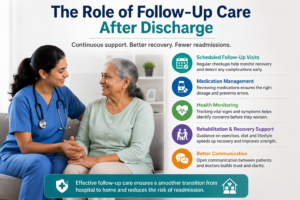
The Role of Follow-Up Care After Discharge
Follow-up care provides ongoing medical and personal support once a patient leaves the hospital. It includes scheduled doctor visits, medication reviews, health monitoring, and rehabilitation guidance. These services help identify potential complications early and ensure patients follow prescribed treatment plans. Consistent communication between doctors and patients strengthens recovery and reduces preventable hospital readmissions effectively. If you want to reduce your patients’ hospital stays, then book the best Elderly hospital support Service in Kolkata, and make your patients’ hospital visits more hassle-free.
Conclusion
Patients can reduce readmission risks by following discharge instructions carefully, attending follow-up appointments, maintaining medication schedules, and adopting healthy lifestyle habits. Keeping communication open with doctors allows early intervention if symptoms arise. Family members and nurses should stay actively involved throughout recovery. These proactive measures create a safer transition from hospital to home care. If you want homely care for your elderly parents, then contact CareKnight Clinic, the best Elder Care Service clinic in Kolkata, and get personal assistance for your older patients.
Mostly Asked Questions
1 Why are follow-up appointments important after hospital discharge?
They help monitor recovery, identify complications early, adjust treatments, and ensure patients remain on track with care.
2 Can follow-up care reduce healthcare costs significantly?
Yes, preventing avoidable readmissions lowers treatment expenses, emergency visits, and long-term healthcare burdens for many patients.
3 Who benefits most from professional follow-up care services?
Senior citizens, chronic disease patients, surgery patients, and individuals needing continuous recovery support benefit from follow-up care.
Also Read: How Real-Time Medical Updates Build Trust in Healthcare Services